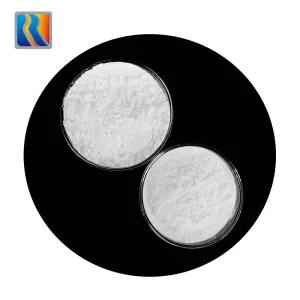
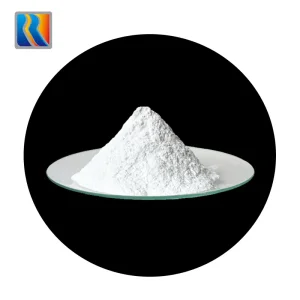
Explore our industrial chemical solutions directly manufactured to international grade safety parameters.
In modern industrial chemistry, Paraformaldehyde (PFA) serves as an indispensable precursor for thermosetting resins, agricultural syntheses, pharmaceutical compounding, and organic coating processes. However, as global supply lines tighten and procurement teams prioritize cost-containment, sourcing "cheap" Paraformaldehyde presents a dual challenge: managing the bottom line while strictly mitigating the occupational health and safety hazards linked to Paraformaldehyde Exposure.
This comprehensive whitepaper explores the critical integration of strict exposure mitigation protocols with the competitive manufacturing advantages offered by China's leading chemical production facilities. We analyze how cutting-edge automation, vertical supply chains, and localized compliance support can minimize exposure risks without compromising your raw material budget.
E-E-A-T Technical Insight: Paraformaldehyde is the polymerization product of formaldehyde with a typical degree of polymerization of 8 to 100 units. During storage, handling, and chemical reactions, depolymerization releases gaseous formaldehyde. Therefore, evaluating a supplier's packaging integrity, physical particle structures (e.g., prills vs. fine powders), and logistics safety is key to preventing hazardous inhalative and dermal exposure levels in the workplace.
Occupational exposure to Paraformaldehyde vapor or dust is highly regulated under OSHA (Occupational Safety and Health Administration), REACH (Registration, Evaluation, Authorisation and Restriction of Chemicals), and the EU-OSHA framework. Prolonged exposure can lead to severe respiratory irritation, dermal sensitization, and is classified as carcinogenic under various international directories.
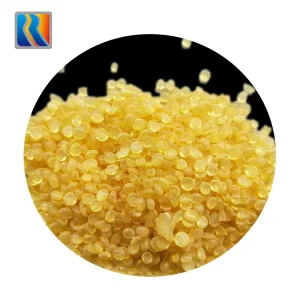
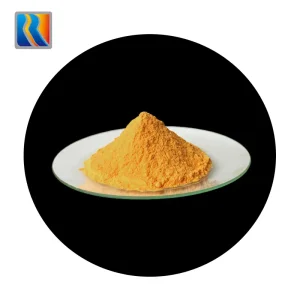
Responsible manufacturing demands that sourcing teams select suppliers who provide comprehensive Material Safety Data Sheets (MSDS/SDS), run automated dust-free packaging configurations, and export products in heavy-duty, multi-layered vapor barrier bags. By utilizing prilled or low-dust granulated forms rather than fine powders, enterprises significantly lower the risk of particulate suspension during bag-slitting and reactor feeding operations, keeping ambient formaldehyde levels well below the Permissible Exposure Limit (PEL) of 0.75 ppm (8-hour TWA).
Founded in March 2020, Shandong Runtai New Materials Co., Ltd. is a leading integrated chemical manufacturer specializing in fine chemical solutions, including formaldehyde, paraformaldehyde, urea formaldehyde resin, melamine powder, and melamine glazing powder.
With our corporate headquarters located in Zaozhuang City, Shandong Province, and operations spanning across five regional branches, our scale of production is designed to service both domestic and massive global industrial requirements. Our state-of-the-art facility covers an expansive area of 270,000 square meters, representing a total capital investment of 2.06 billion yuan.
Formaldehyde Annual Tons
Urea Formaldehyde Resin Tons
Melamine Annual Tons
China Domestic Market Share
Through aggressive manufacturing capacity expansion, we have established market dominance, capturing approximately an 80% share within the domestic Chinese market. At the same time, we have expanded our international reach, exporting high-purity chemical batches to the United States, Thailand, Kenya, Egypt, and other countries.
Our manufacturing facility runs on modern technological principles: *automatic control, safe and reliable operation, process stability, energy efficiency, and resource utilization*. Runtai leverages a state-of-the-art Distributed Control System (DCS) to monitor and regulate synthesis parameters across the entire production line.
By automating process lines, we reduce human exposure risks during the highly critical stages of polymerization and drying. The closed-loop DCS ensures that physical exposure to formaldehyde gases is virtually eliminated inside the production environment. Furthermore, automated processes reduce raw material consumption and slash operating costs. This enables us to pass the savings to customers, establishing Runtai as a highly cost-competitive, yet safety-focused, global Paraformaldehyde supplier.
DCS closed-loop automation reduces worker contact with hazardous monomers, optimizing plant safety and product quality.
Long-term strategic partnership with Beijing University of Chemical Technology (BUCT) Changzhou Research Institute.
An extensive upstream-to-downstream value chain covering basic formaldehyde, resins, and molding compounds.
Why is China the premier destination for sourcing high-volume chemicals like Paraformaldehyde? The answer lies in localized raw material clustering, integrated energy logistics, and scale economies. At Runtai, we maintain high-capacity methanol feedstock channels, protecting our manufacturing cycles from severe raw material pricing volatility.
Because we own and manage massive production capacities—such as our 380,000-ton formaldehyde and 300,000-ton urea formaldehyde resin pipelines—we achieve unparalleled material integration. The proximity of our plant locations to key shipping terminals facilitates fast shipping procedures, reduces ocean freight lead times, and maintains container-level transit safety.
Paraformaldehyde acts as a highly concentrated alternative to liquid formaldehyde solutions (formalin). By using solid PFA, chemical plants avoid introducing excess water into their reactors. This increases process yield, reduces waste-water processing charges, and improves production safety.
Expert answers regarding safety handling, chemical metrics, and bulk purchase strategies.
Complete your supply line with premium, factory-direct chemical additives and compound resins.
 Runtai