Wholesale Paraformaldehyde: High-Quality Crystalline Solid from China Suppliers - Trusted Factory for Industrial Applications Suppliers, Supplier

Paraformaldehyde is a white, crystalline solid that represents a polymeric form of formaldehyde, consisting of linear chains of formaldehyde molecules. This product is produced through the polymerization of formaldehyde gas under specific conditions and heat. As a China-based supplier and factory, we take pride in offering high-quality paraformaldehyde, which is soluble in water and can be easily depolymerized back into formaldehyde when heated or treated with acids or bases, Paraformaldehyde plays a crucial role in various industrial applications, particularly in the production of resins, including phenolic and urea-formaldehyde resins. These resins are widely used in adhesives, coatings, and composite materials. Additionally, paraformaldehyde is recognized for its effective antimicrobial properties, making it an essential disinfectant and preservative in laboratory and medical settings. It is also extensively used in histology for tissue fixation. Choose us as your reliable China supplier and factory for paraformaldehyde to ensure top-notch quality and performance in your applications

Product Description

🔬Appearance

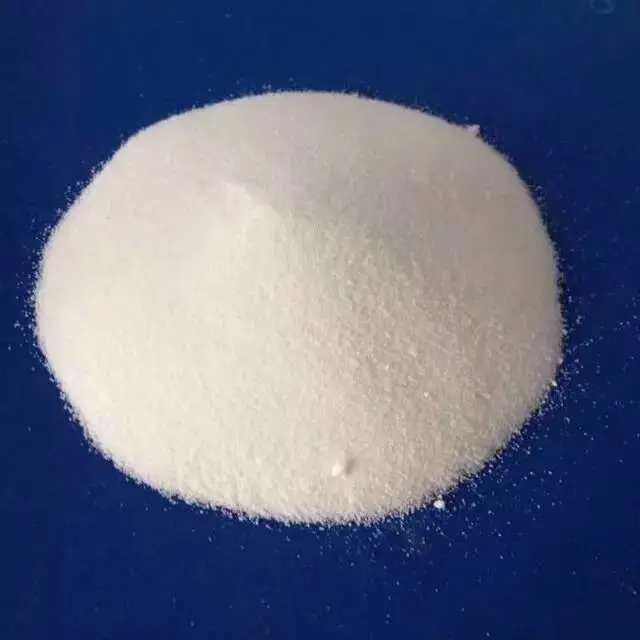
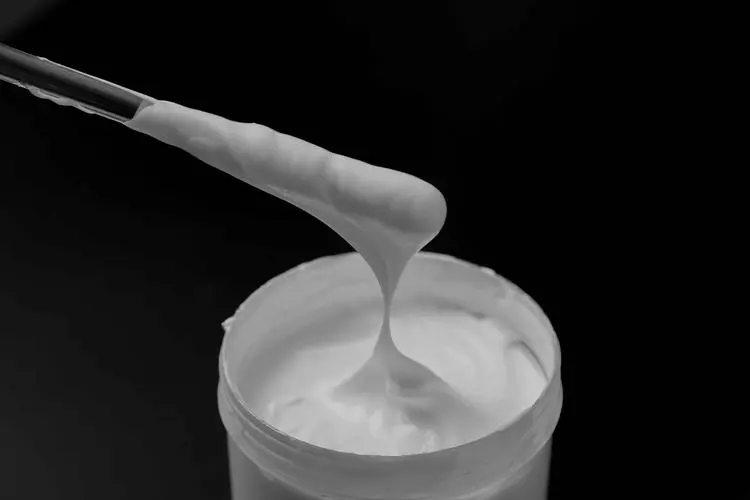
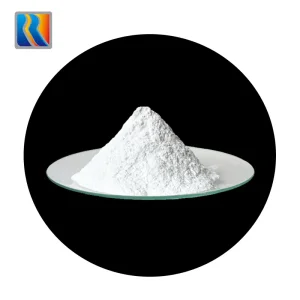
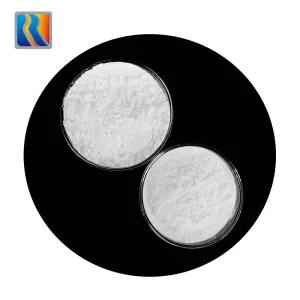
Paraformaldehyde is a solid form of formaldehyde, It is often found in the form of small, granular particles or as a fine powder. It is soluble in water and commonly used as a source of formaldehyde in various applications. Paraformaldehyde can depolymerize to release formaldehyde gas when heated, making it useful for applications where a slow release of formaldehyde is required, such as in disinfection, preservation, and as a fixative in biological specimens. It is also used in the production of resins, plastics, and as a fumigant in agriculture.

📋Applications

The applications of paraformaldehyde include:
1. Disinfection and Sterilization: Paraformaldehyde is used as a disinfectant and sterilizing agent in various settings, including healthcare facilities, laboratories, and industrial environments.
2. Agriculture: It is used as a fumigant and preservative in agriculture to control pests, fungi, and bacteria in stored agricultural products and soil.
3. Production of Resins: Paraformaldehyde is a key raw material in the production of resins, such as phenol-formaldehyde and urea-formaldehyde resins, which are used in the manufacturing of wood products, adhesives, and coatings.
4. Chemical Synthesis: It is used as a source of formaldehyde in various chemical reactions and synthesis processes.
5. Biological Fixative: Paraformaldehyde is used as a fixative in biological specimen preparation for microscopy and other laboratory analyses.

📦Packages

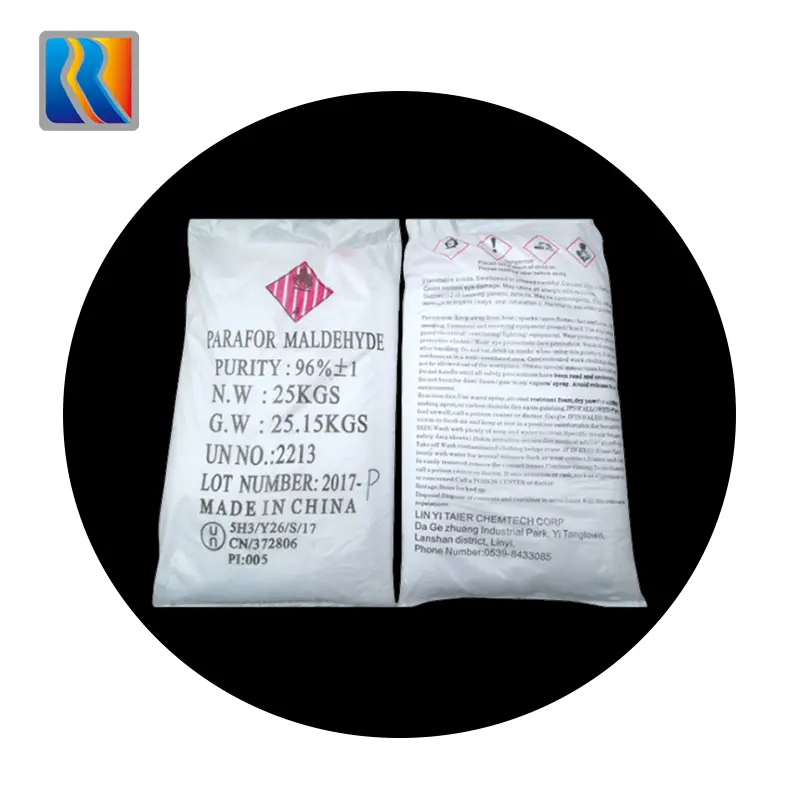
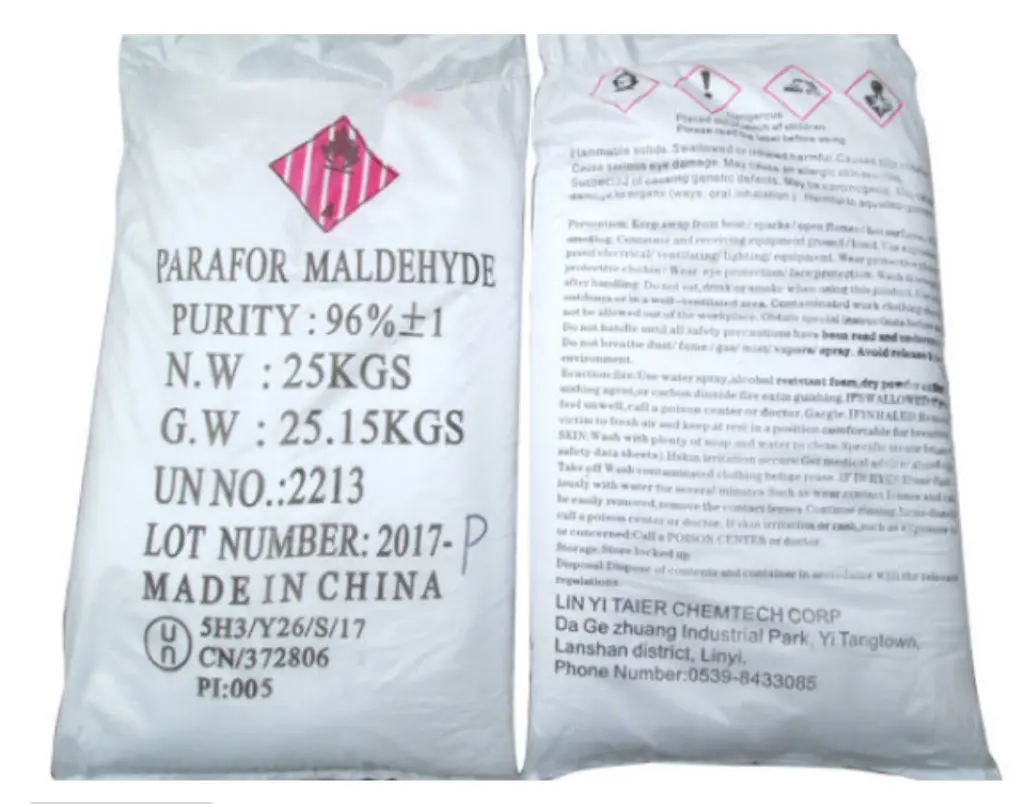
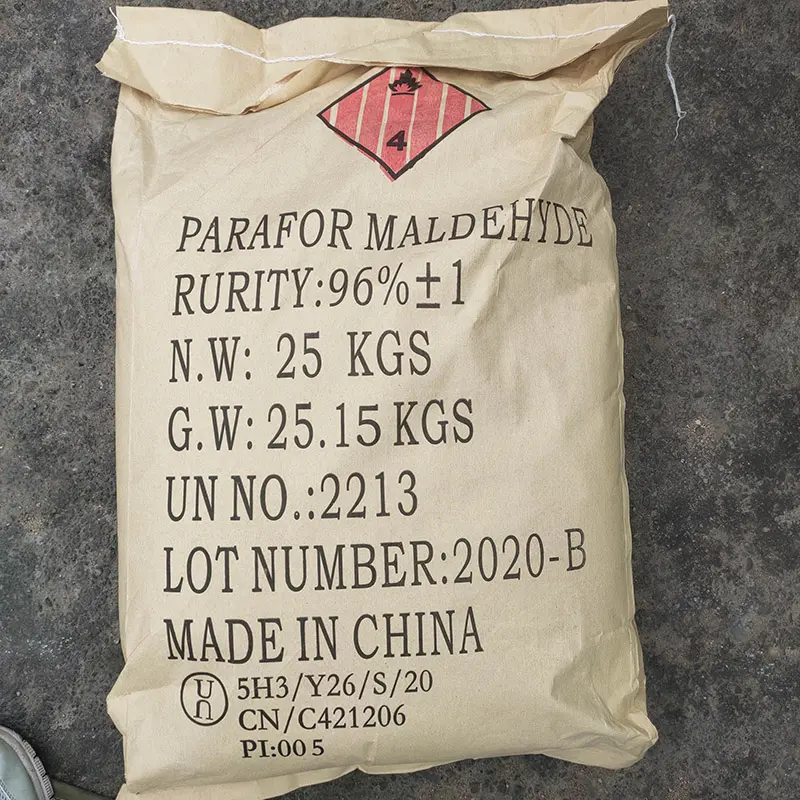
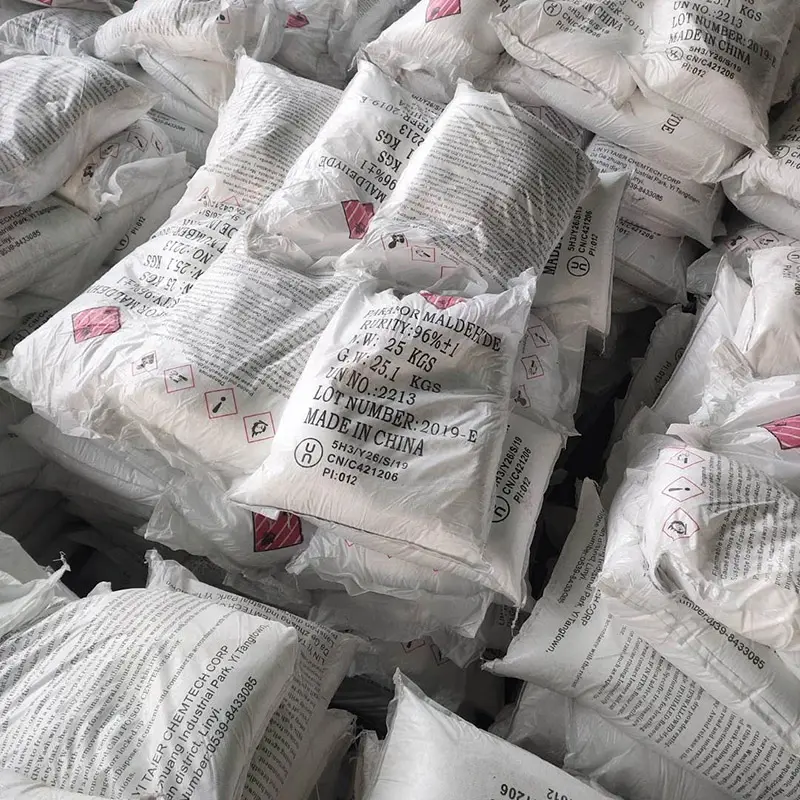
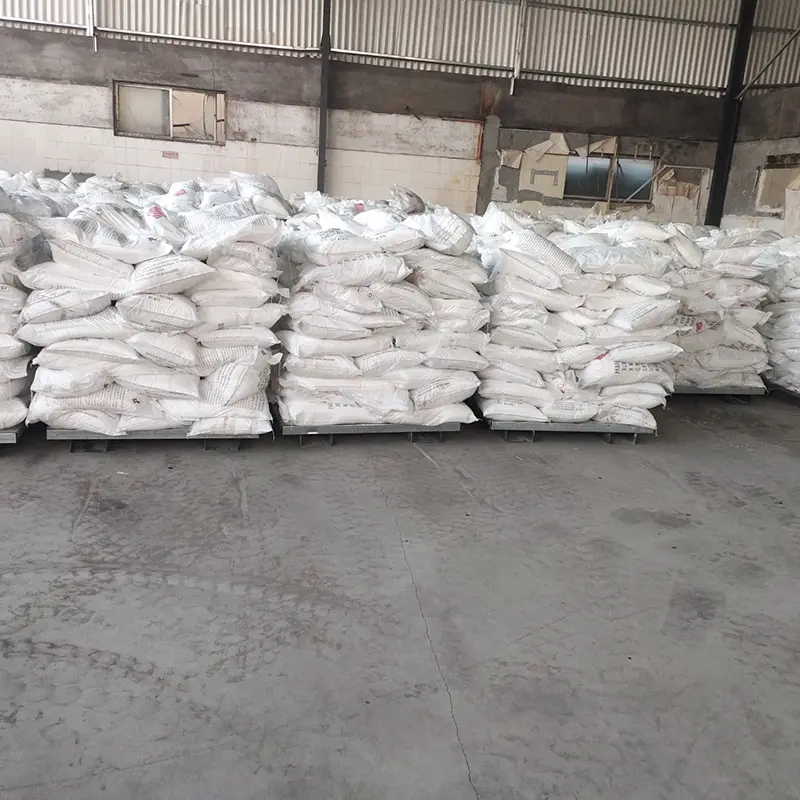
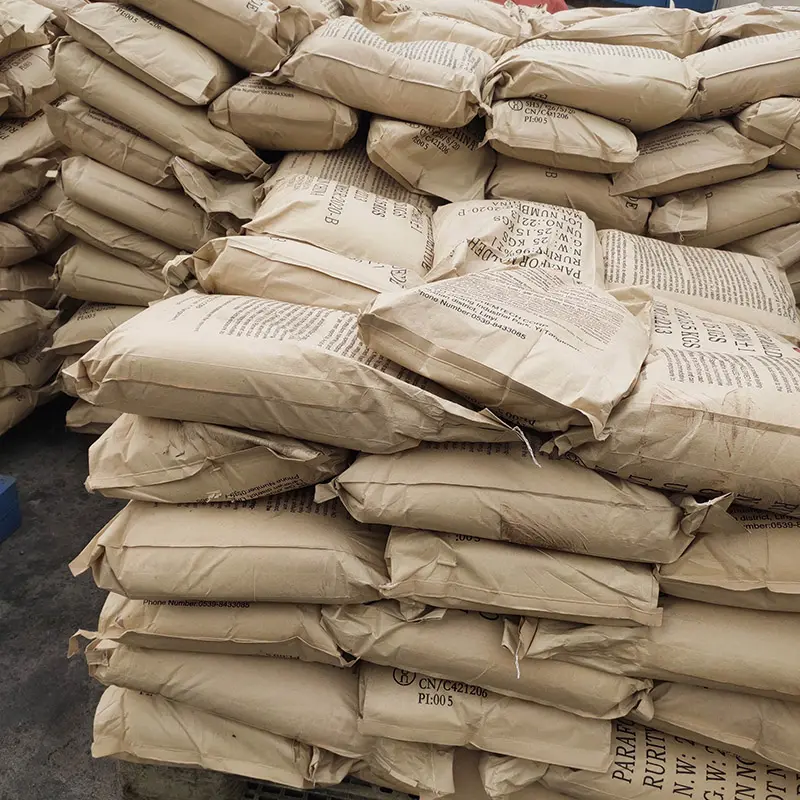
Packed in 25kg Hazardous chemicals packaging bags

⚙️Characteristics

Chemical Structure: It is a polymer of formaldehyde, typically existing as a white, crystalline powder. Its structure consists of linear chains of formaldehyde molecules.
Solubility: Paraformaldehyde is soluble in water, and upon heating or in the presence of acids or bases, it can depolymerize back into formaldehyde.
Melting Point: It has a melting point of around 150-160°C (302-320°F), which can vary depending on the degree of polymerization.
Reactivity: Paraformaldehyde is reactive and can release formaldehyde gas, which is a known irritant and potential carcinogen.
Antimicrobial Properties: It exhibits effective antimicrobial properties, making it useful as a disinfectant and preservative in laboratory and medical settings.
Frequently Asked Questions (FAQ)

What is paraformaldehyde?

Paraformaldehyde is a solid, polymerized form of formaldehyde. It typically exists as a white, crystalline powder or small granular particles and consists of linear chains of formaldehyde molecules.

Is paraformaldehyde soluble in water?

Yes, paraformaldehyde is soluble in water. When heated or exposed to acids or bases, it depolymerizes to release formaldehyde gas.

What are the primary applications of paraformaldehyde?

It is widely used for disinfection and sterilization, as a fumigant in agriculture, a biological fixative in laboratories, and as a key raw material in the production of resins and plastics.

What is the melting point of paraformaldehyde?

The melting point of paraformaldehyde is around 150-160°C (302-320°F). The exact temperature can vary depending on its degree of polymerization.

How is paraformaldehyde typically packaged?

It is generally packed in 25kg hazardous chemicals packaging bags to ensure safe transport and handling.

Does paraformaldehyde have antimicrobial properties?

Yes, it exhibits highly effective antimicrobial properties, which makes it an excellent choice as a disinfectant and preservative in medical, laboratory, and industrial environments.

Related Products