Pottery Glaze Powder may look like ordinary colored dust, but it is a carefully balanced mixture of minerals, glass-forming materials, and colorants. When mixed with water and brushed onto a clay surface, it creates a thin, workable coating. The real transformation happens inside the kiln. Heat melts the powder, encourages chemical reactions, and forms a glassy surface over the ceramic body.
Ceramic artist and glaze educator John Britt describes the basic idea clearly: “Glaze is essentially glass that is melted onto clay.” His statement explains why firing temperature matters so much. At the right heat, silica can melt, fluxes can lower the melting point, and alumina can help control the glaze’s flow. Too little heat may leave a dry, rough surface. Too much can cause running, bubbling, or crawling.
It is not just colored powder.
A practical test tile often reveals more than a confident prediction. The same Pottery Glaze Powder can appear blue in one kiln and muted in another. Clay color, layer thickness, moisture, firing atmosphere, and cooling speed all influence the final result. Even experienced potters sometimes misjudge a new recipe. That uncertainty is part of the craft, though it should be managed carefully.
This guide will explain what Pottery Glaze Powder contains, how it changes during firing, and why application methods matter. It will also examine common defects, safe studio practices, and simple testing methods. The goal is not to promise perfect results, but to make each firing more understandable.
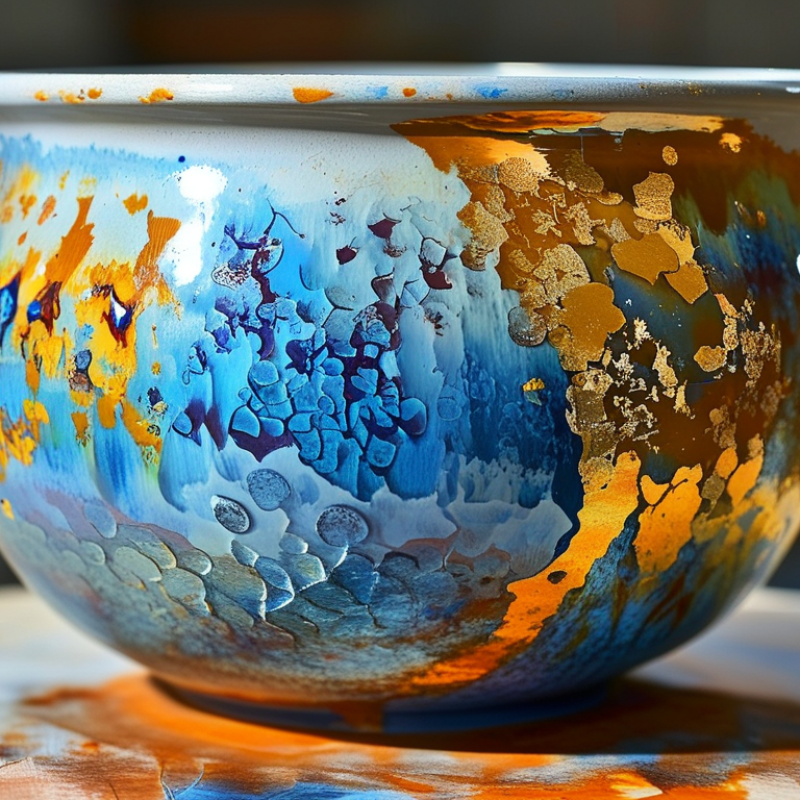
Pottery glaze powder is a carefully measured dry mixture that becomes a glass-like coating during firing. It is not simply colored dust. Most formulas contain silica, which forms the glass, and alumina, which helps control viscosity. Fluxes lower the melting temperature, allowing the glaze to mature inside a kiln.
Small amounts of clay, metal oxides, or ceramic stains may also be included. Clay can help the wet glaze cling to a pot. Iron, copper, cobalt, and other colorants can create different surface tones. Their results depend on firing temperature, atmosphere, thickness, and the clay body underneath. A blue powder may not produce a blue surface.
Water activates the powder for application, but it does not chemically finish the glaze. Mixing creates a suspension that can be brushed, dipped, or sprayed onto leather-hard or bisque-fired ware. The coating dries first. Heat transforms it later. Silica melts, fluxes react, and alumina helps the surface remain stable instead of running away.
In studio testing, I have found that identical powder can behave differently after minor changes in water content. My early test tiles were too thick and misleading. That mistake taught me to label every batch and fire small samples. Glaze powder should be handled carefully, because fine dust can enter the lungs. A respirator suitable for ceramic dust, ventilation, and the supplier’s safety information are practical safeguards.
What Is Pottery Glaze Powder and How Does It Work?
How Glaze Powder Becomes a Liquid Coating
Pottery glaze powder is a dry blend of silica, alumina, fluxes, colorants, and sometimes fritted glass. It does not become liquid immediately after adding water. Water creates a workable suspension first. During firing, heat softens the fluxes and melts the silica-rich materials. The glaze then flows across the clay surface, forming a thin glassy coating.
In my studio experience, mixing is more sensitive than it appears. A small change in water can alter brushing, dipping, and drying behavior. Many potters test a specific gravity near 1.45–1.55 for dipping glazes, but the correct value depends on the recipe and application method. A 100-mesh sieve can remove coarse particles, while careful stirring helps prevent settling. The U.S. Geological Survey’s Mineral Commodity Summaries 2024 reports approximately 600,000 metric tons of apparent U.S. feldspar consumption in 2023. Feldspar matters because it supplies important fluxes in many ceramic glaze systems.
Tips: Add water gradually. Let the mixture rest before final adjustment. Check thickness on a test tile, not only in the bucket. A hydrometer can improve consistency, but it cannot replace firing tests. A recipe can still mislead.
Some powders contain soluble materials that change the slurry over time. Deflocculants may reduce water demand, yet excessive amounts can make application uneven. Watch the surface. If the glaze dries too quickly, the coating may crawl or pinhole during firing.
| Stage or Dimension | What It Contains or Does | Typical Data or Condition | Effect on the Ceramic Surface |
|---|---|---|---|
| Glaze powder | A dry blend of glass-forming materials, fluxes, stabilizers, colorants, and other functional additives. | Supplied as a dry, free-flowing material that must be mixed with water before application. | Provides the chemical components that will later melt and form a glassy coating. |
| Glass former | Usually supplied by silica or other silica-containing materials. | Silica remains solid at ordinary kiln temperatures unless combined with suitable fluxes. | Creates the main glass network responsible for hardness, gloss, and chemical resistance. |
| Flux | Materials such as feldspathic or alkaline-earth compounds that help the glaze melt. | Reduces the temperature at which the glass-forming mixture becomes fluid. | Controls melting, surface smoothness, gloss level, and the final firing range. |
| Stabilizer | Often includes alumina-bearing materials that help control the glaze structure. | Small changes in the amount of stabilizer can significantly affect flow and viscosity. | Helps prevent excessive running and improves the durability of the fired coating. |
| Colorant or effect additive | Metal oxides, stains, crystals, or other compatible ceramic colorants. | Color can change with glaze chemistry, application thickness, atmosphere, and firing temperature. | Produces colors, opacity, mottling, speckles, or other decorative effects. |
| Water addition | Water converts the powder into a suspension that can be brushed, dipped, poured, or sprayed. | Water content is adjusted to achieve the required application consistency; the exact ratio varies by formula and method. | Allows the glaze particles to spread over the clay body before drying. |
| Suspension | Fine solid particles are temporarily dispersed throughout the water rather than dissolved completely. | Regular stirring or mixing is often needed because particles can settle during use. | Promotes a more even coating and helps maintain consistent color and thickness. |
| Application layer | The wet glaze suspension is deposited on leather-hard or bisque-fired ware, depending on the process. | Typical dry coating thickness is often about 0.3–1.0 mm, although the suitable thickness depends on the glaze. | Determines surface coverage, opacity, texture, color intensity, and the risk of defects. |
| Drying | Water evaporates while the mineral particles remain on the ceramic surface. | The coating becomes matte, powdery, and fragile before firing. | Creates a temporary dry layer that must be handled carefully to avoid chipping or contamination. |
| Initial kiln heating | Remaining physical moisture leaves the coating and the clay body as the kiln temperature rises. | Controlled heating reduces the risk of steam-related damage and cracking. | Prepares the glaze materials for chemical reactions and softening at higher temperatures. |
| Melting and reaction | Fluxes begin to react with glass formers and stabilizers during the firing cycle. | Many pottery glazes mature broadly between about 1,000°C and 1,300°C, depending on their formulation. | The dry particles fuse into a continuous, glass-like liquid layer. |
| Flow and leveling | The molten glaze spreads across the ceramic body and fills surface irregularities. | Viscosity varies with temperature, composition, firing time, and coating thickness. | Creates the final degree of smoothness, gloss, texture, and movement. |
| Cooling and solidification | The molten glaze cools and becomes a rigid glassy or semi-glassy coating. | Cooling rate can influence crystal growth, color development, and thermal stress. | Locks in the final appearance and bonds the coating to the ceramic body. |
| Glaze fit | The relationship between the thermal expansion of the glaze and the ceramic body. | A suitable match helps minimize defects such as crazing, shivering, and peeling. | Influences long-term adhesion, strength, and resistance to surface cracking. |
| Final coating properties | A fired layer that may be glossy, satin, matte, opaque, translucent, textured, or crystalline. | Properties depend on the recipe, application thickness, firing schedule, and kiln atmosphere. | Improves appearance and can provide a more sealed, durable, and easier-to-clean surface. |
What Is Pottery Glaze Powder and How Does It Work?
Pottery glaze powder is a measured blend of glass-forming minerals, fluxes, stabilizers, and colorants. Silica builds the glass network. Feldspar and other fluxes help that network melt at lower temperatures. Kaolin adds alumina, which improves durability and controls flow. The USGS Mineral Commodity Summaries 2024 reported about 470,000 metric tons of feldspar mined in the United States during 2023. That figure shows the material’s industrial scale, although studio glaze recipes use only small, carefully balanced amounts.
During firing, the powder changes through several reactions. Water leaves first. Organic residues burn away. Carbonates release carbon dioxide, sometimes creating pinholes or blisters. Around 1,000–1,300°C, many ceramic bodies and glazes begin significant vitrification, according to the European Commission’s Ceramics Best Available Techniques Reference Document. Fluxes dissolve gradually, then help silica form a continuous glass phase. Alumina slows excessive flow and supports the fired surface.
The kiln atmosphere also matters. Oxidation can produce clearer colors, while reduction changes how certain metal oxides behave. Copper may create green, red, or dark effects, depending on chemistry and cooling. In studio testing, a cone placed near the ware often reveals uneven heat that a digital display misses. I once blamed the recipe for crawling, but excessive application thickness was the real cause. Glaze chemistry is precise, yet firing remains slightly imperfect. That uncertainty deserves testing.
During firing, glaze powders undergo several chemical and physical changes. Quartz passes through its major crystal inversion near 573°C, clay minerals lose chemically bound water, and calcium carbonate releases carbon dioxide as it decomposes. At higher temperatures, feldspar and other fluxes form a molten phase that dissolves silica and alumina, producing a continuous glassy surface. The temperatures shown are representative values; the exact reaction range depends on the glaze recipe, particle size, heating rate, and kiln atmosphere.
Pottery glaze powder is a carefully measured blend of glass-forming minerals, fluxes, stabilizers, and optional colorants. Mixed with water, it becomes a liquid coating for clay. The powder itself does not bond permanently to pottery. The kiln creates that bond.
Before firing, wet glaze enters the clay’s tiny pores and grips its rough surface. As the water evaporates, mineral particles remain in a thin, fragile layer. Handle it gently. A dry glaze coat can powder away if it is too thick, dusty, or poorly mixed.
The timing matters. During firing, fluxes help silica melt at a controlled temperature. The melted glaze flows across the clay and forms a glassy surface. Some components also interact with the clay body near the boundary. This creates a stronger connection than surface adhesion alone. The glaze must cool at a compatible rate. Otherwise, stress may cause crazing, shivering, or flaking.
It is not magic.
In practice, successful bonding depends on clay porosity, glaze thickness, firing temperature, and cooling conditions. I have found that a test tile reveals problems more honestly than a beautiful finished piece. A glaze may look smooth but still fit the clay poorly. Even a small change in water content can affect application. Records, repeat tests, and careful observation make the process more reliable.
Pottery glaze powder is a dry blend of glass-forming materials, minerals, and colorants. When mixed with water, it becomes a brushable or pourable coating. During firing, the particles soften and fuse into a glassy surface. The final result depends on more than the recipe. Clay type, glaze thickness, firing temperature, and kiln atmosphere all matter.
A thin layer may look pale, dry, or uneven. A heavy layer can crawl, blister, or run onto the kiln shelf. Particle size also affects application. Fine powders usually suspend more easily, while coarse materials may settle quickly.
Water quality can change the mixture too. Hard water sometimes affects consistency and settling. In studio tests, small changes in drying time have produced noticeable differences. I have also found that test tiles can look misleading when the glaze is applied more carefully than on a real pot.
Tips:
Sieve the mixed glaze before use. Stir it often. Mark each test tile clearly. Apply two or three measured coats, then compare the surfaces after firing. Check the kiln’s actual temperature, not only its programmed setting. Keep notes on clay, thickness, firing schedule, and cooling time. This may feel excessive, but it makes unexpected results easier to understand. Wear suitable respiratory protection when handling dry powder, and avoid creating airborne dust.
It combines silica, fluxes, alumina-rich stabilizers, and optional colorants. Silica forms the glass network. Fluxes lower the melting temperature.
Water evaporates first, followed by the burning of organic residues. Carbonates release carbon dioxide. This can cause pinholes or blisters.
Significant vitrification often begins around 1,000–1,300°C. Fluxes gradually dissolve and help silica create a continuous glass phase.
Before firing, wet glaze settles into the clay’s tiny pores. During firing, it melts and interacts with the clay surface. The bond becomes stronger.
A coat may become fragile when it is too thick, dusty, or poorly mixed. Handle it gently. Water content also changes application behavior.
Oxidation may produce clearer colors, while reduction changes how some metal oxides behave. Cooling conditions can alter the final surface significantly.
Glaze and clay may cool at incompatible rates. The resulting stress can crack, lift, or remove the fired surface. The recipe is not always responsible.
Place a firing cone near the pottery. It can reveal uneven heat that a digital display misses. Testing matters.
A test tile exposes glaze thickness, color, and fit problems before a finished piece is used. I once blamed the recipe, but thick application caused crawling.
Chemistry provides control, but firing remains slightly imperfect. Keep records, repeat tests, and inspect the cooled surface carefully. Some uncertainty remains.
Pottery Glaze Powder is a carefully prepared blend of glass-forming materials, minerals, fluxes, and colorants designed to create a durable, decorative surface on ceramic ware. When mixed with water, the powder becomes a smooth liquid coating that can be brushed, dipped, or poured onto clay. The water helps distribute the ingredients evenly, while the solid particles remain suspended until the glaze dries on the ceramic surface.
During firing, the glaze components soften, melt, and react with one another under high heat. Fluxes help lower the melting temperature, glass-forming materials create the protective coating, and colorants influence the final shade. As the glaze bonds with the clay body, it forms a unified surface that may be glossy, matte, textured, or translucent. Final results depend on powder composition, water ratio, application thickness, clay type, firing temperature, atmosphere, and cooling conditions. These factors work together to determine the glaze’s color, texture, durability, and overall appearance.

Runtai