The 2026 Top Urea And Formaldehyde Manufacturers Worldwide guide examines an industry shaped by chemistry, forestry, construction, and changing environmental expectations. Urea And Formaldehyde resins remain important for particleboard, medium-density fibreboard, plywood, laminates, and other engineered wood products. Their fast curing, strong bonding, and competitive cost still matter on factory floors.
Yet the market is not simple.
Dr. Charles E. Carraher Jr., a respected polymer chemist, described polymer chemistry as “the chemistry of macromolecules.” This perspective helps explain why resin performance depends on molecular structure, formulation control, curing temperature, wood moisture, and production speed. A manufacturer may offer impressive laboratory results, but real performance can change beside a press line running at high humidity.
This overview considers major producers through practical indicators. These include production capacity, geographic reach, research investment, product consistency, technical support, and formaldehyde-emission management. It also considers how companies respond to stricter indoor-air standards and customer demand for lower-emission panels.
Numbers can mislead.
A large facility does not always provide the best technical service. A smaller supplier may respond faster, but perhaps lack global logistics or extensive testing resources. This is where careful comparison becomes necessary. Public rankings also contain gaps, because private companies may disclose limited data.
The manufacturers discussed here should therefore be viewed through evidence, not reputation alone. Certifications, independent testing, transparent product documentation, and verified customer experience deserve close attention. The strongest companies will likely combine dependable resin chemistry with safer handling practices, efficient production, and honest communication about limitations.
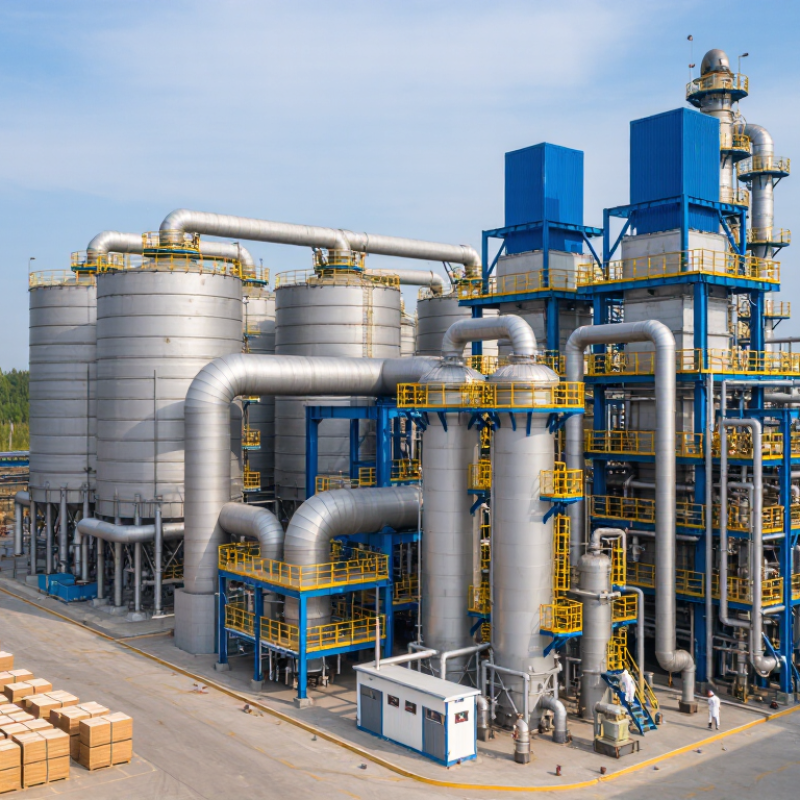
Urea is a white, crystalline compound with the formula CO(NH₂)₂. It dissolves readily in water and contains a high proportion of nitrogen. In agriculture, this property makes urea a widely used nitrogen fertilizer. Its nitrogen must convert through soil reactions before plants can absorb it efficiently. Temperature, moisture, and soil conditions affect that process. Field results can vary more than simple labels suggest.
Formaldehyde is a simple aldehyde with the formula CH₂O. At normal conditions, it exists as a colorless gas with a strong, recognizable odor. Commercial facilities often handle it as an aqueous solution because this form is easier to store and transfer. It reacts readily with many compounds, especially those containing nitrogen-based functional groups. That reactivity gives it important industrial value, but it also demands controlled exposure management.
Together, urea and formaldehyde can form urea-formaldehyde resins. These resins support the manufacture of composite wood panels, molded products, coatings, and selected textile treatments. Production teams monitor concentration, temperature, acidity, moisture, and curing time. Small process changes can alter strength, viscosity, emissions, and product consistency. Real manufacturing is less tidy than a process diagram. Testing remains essential. Reliable producers also verify raw-material purity, worker protection measures, storage conditions, and applicable environmental requirements before shipment.
Manufacturer-neutral reference table covering the principal chemical characteristics, commercial forms, production routes, applications, and handling considerations of urea and formaldehyde.
| Data Dimension | Urea | Formaldehyde | ||
|---|---|---|---|---|
| Technical Reference | Industrial Role | Technical Reference | Industrial Role | |
| Definition | Organic nitrogen compound with the formula CH4N2O; also known as carbamide. | Major nitrogen fertilizer and an important feedstock for amino resins and selected chemical products. | Simple aldehyde with the formula CH2O; commercially handled mainly as an aqueous solution or stabilized mixture. | Reactive building block used to manufacture resins, plastics, coatings, adhesives, and several intermediate chemicals. |
| Molar Mass | 60.06 g/mol | Its high nitrogen content, approximately 46% by mass, supports efficient fertilizer transport and application. | 30.03 g/mol | Its small molecular size and high reactivity make it suitable for condensation and polymer-forming reactions. |
| Appearance at Normal Conditions | White, crystalline solid; commonly supplied as prills or granules. | Solid products are suitable for bulk handling, bagging, blending, and controlled-release formulations. | Pure formaldehyde is a gas at room temperature; commercial material is commonly supplied as a clear aqueous solution. | Aqueous solutions simplify storage, transport, metering, and use in resin manufacturing. |
| Key Physical Properties | Melting point approximately 133 °C, with decomposition; highly soluble in water and capable of absorbing moisture from air. | Moisture sensitivity affects caking, granule strength, storage stability, and spreading performance. | Boiling point of pure formaldehyde is approximately −19.3 °C; commercial aqueous solutions have properties that vary with concentration and stabilizer content. | Concentration, temperature, and stabilization influence evaporation, polymerization tendency, and process compatibility. |
| Typical Commercial Form | Prills Granules Aqueous solution Melt | Selected according to fertilizer blending, fertigation, industrial synthesis, and logistics requirements. | Aqueous solution Stabilized solution Process gas | Commercial specifications are normally defined by concentration, stabilizer system, acidity, color, and impurity limits. |
| Primary Manufacturing Route | Produced industrially from ammonia and carbon dioxide through ammonium carbamate formation followed by dehydration. | The process is commonly integrated with ammonia production to improve feedstock efficiency and energy utilization. | Produced mainly by catalytic oxidation or dehydrogenation of methanol using air over a suitable catalyst system. | Production is usually integrated with downstream resin, adhesive, coating, or chemical-intermediate operations. |
| Major Downstream Products | Nitrogen fertilizers, urea-formaldehyde resins, melamine-urea-formaldehyde systems, diesel exhaust fluid, and selected industrial chemicals. | Supports agriculture, engineered wood, emissions control, chemical processing, and specialty formulations. | Urea-formaldehyde, melamine-formaldehyde, phenol-formaldehyde, and other formaldehyde-based resins; also used for chemical intermediates. | Supports construction materials, furniture panels, insulation, molded products, coatings, textiles, and laboratory or industrial synthesis. |
| Fertilizer and Emissions-Control Role | Used directly as a solid nitrogen fertilizer and in aqueous diesel exhaust fluid containing 32.5% high-purity urea in deionized water. | In selective catalytic reduction systems, urea decomposes to form ammonia, which helps reduce nitrogen oxides in diesel exhaust. | Not generally used as a fertilizer or diesel exhaust reductant. | Functions primarily as a chemical feedstock rather than a nutrient or emissions-control reagent. |
| Role in Engineered Wood | Reacts with formaldehyde to form urea-formaldehyde resins and related amino resins. | Provides a cost-effective resin chemistry widely used in particleboard, medium-density fiberboard, and interior-grade wood adhesives. | Reacts with urea and other co-reactants through condensation and cross-linking reactions. | Contributes to adhesive strength, curing behavior, moisture performance, and formaldehyde-emission characteristics of finished panels. |
| Water and Moisture Behavior | Very soluble in water and hygroscopic; concentrated solutions can crystallize or change viscosity as temperature varies. | Storage facilities require moisture control, ventilation, and appropriate temperature management to limit caking and product degradation. | Highly soluble in water; solutions may polymerize or form paraformaldehyde under unfavorable temperature, concentration, or stabilization conditions. | Closed transfer systems and process controls help maintain product quality and limit vapor exposure. |
| Principal Safety Considerations | Generally low acute toxicity compared with many industrial chemicals, but dust may irritate the eyes and respiratory tract; decomposition can release irritating gases. | Use dust control, protective eyewear, gloves, adequate ventilation, and procedures that prevent contamination or uncontrolled heating. | Flammable and toxic by inhalation; vapors and solutions can irritate or damage the eyes, skin, and respiratory system. Formaldehyde is classified as a human carcinogen by major health authorities. | Requires closed handling, vapor control, exposure monitoring, compatible materials, emergency response procedures, and strict regulatory compliance. |
| Storage and Transport Focus | Keep dry, prevent contamination, avoid excessive heat, and protect from prolonged exposure to humid air. | Bulk storage design must address caking, dust, corrosion, loading integrity, and product segregation. | Store in compatible, labeled containers with temperature control and suitable ventilation; prevent ignition sources and incompatible chemical contact. | Transport and storage requirements depend on concentration, stabilizer content, local hazardous-material classifications, and applicable regulations. |
| Quality-Control Parameters | Nitrogen content, biuret, moisture, particle-size distribution, crushing strength, free acidity, and caking tendency. | These parameters affect agronomic performance, blending behavior, storage life, and application uniformity. | Formaldehyde concentration, methanol or stabilizer content, acidity, color, density, polymer content, and trace impurities. | These parameters affect resin reactivity, curing rate, viscosity, storage stability, emissions, and finished-product performance. |
| Relevant Market Segments | Agriculture Engineered wood Emissions control Chemical processing | Demand is influenced by crop nutrition, fertilizer logistics, environmental regulations, and construction-material production. | Resins and adhesives Construction materials Coatings Chemical intermediates | Demand is influenced by construction activity, furniture and panel production, coatings consumption, and industrial chemical synthesis. |
Reference note: Values are representative technical data for common industrial grades. Actual specifications, hazard classifications, concentration ranges, and handling requirements vary by grade, formulation, jurisdiction, and end use. Always consult the applicable safety data sheet, product specification, and local regulations before handling or transporting either substance.
Urea is a white, crystalline compound with the formula CO(NH₂)₂. It dissolves easily in water. Its high nitrogen content supports fertilizer production.
Soil reactions convert urea nitrogen into forms plants can absorb. Temperature, moisture, and soil conditions affect this process. Field results can vary.
Formaldehyde is a simple aldehyde with the formula CH₂O. Under normal conditions, it is a colorless gas with a strong odor.
Aqueous formaldehyde is easier to store and transfer in industrial settings. Facilities still need controlled exposure management and suitable monitoring.
These resins are used in composite wood panels, molded products, coatings, and selected textile treatments. Product quality depends on careful curing.
Concentration, temperature, acidity, moisture, and curing time all matter. Small changes can alter strength, viscosity, emissions, and consistency.
Large production clusters include East Asia, South Asia, North America, North Africa, and the Middle East. Feedstock access and transport networks influence these locations.
Formaldehyde depends heavily on methanol availability. Nearby resin, panel, coating, and construction users can reduce transport challenges.
Buyers should review audited capacity, purity, operating history, energy use, safety reporting, and delivery performance. Capacity alone is not enough.
Not always. Data may be delayed, regional, or self-reported. A large plant can still face port delays or unstable feedstock contracts. My earlier view may be too simple.
This article provides a clear overview of Urea And Formaldehyde, explaining their chemical properties, production roles, and importance across agriculture, adhesives, resins, coatings, and other industrial applications. It examines the global market and outlines practical criteria for identifying leading manufacturers, including production capacity, product consistency, technological capability, safety management, supply reliability, and compliance with recognized quality standards.
The discussion also compares major production technologies, raw material requirements, and quality-control practices used in modern facilities. In addition, it explores key industry trends such as energy efficiency, emissions reduction, responsible sourcing, process optimization, and the development of lower-impact products. By reviewing these factors, the article offers a balanced perspective on the worldwide manufacturing landscape in 2026 and considers how innovation, sustainability goals, changing customer needs, and evolving regulations may influence the future growth and competitiveness of the urea and formaldehyde industries.

 Runtai